The Russia-Ukraine crisis has greatly undermined Africa’s budding post-pandemic recovery. This has been exacerbated by Western-led economic and financial sanctions against Russia which have escalated supply chain bottlenecks and inflationary pressures.
Heightening geopolitical tensions and the disruption of trade routes have raised commodity prices, led to food shortages and raised the risk of stagflation and social tensions in the most vulnerable countries. And even though Africa accounts for only three to four per cent of global fertilizer consumption, Cameroon, Ghana and Ivory Coast, according to the United Nations, are amongst the most vulnerable countries, relying heavily on Russian supplies.
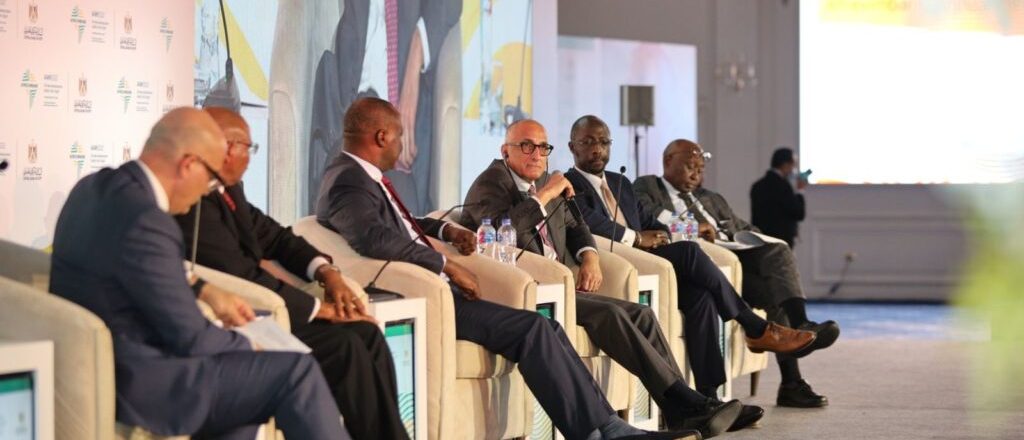
This was the discussion at the second plenary session at the Afreximbank Annual Meetings 2022 where leaders from Africa and the international financial and economic sectors discussed the theme the ‘Implications of the Ukraine Crisis for African Economies and Trade.’
In a panel of distinguished financial experts that included Dr. Donald Kaberuka, Chairman of the Board of Directors, SouthBridge Group and Former President of the African Development Bank (AfDB); H.E. Mr. Tarek Hassan Amer, Governor, Central Bank of Egypt; Dr. Papa N’Diaye, Head, Regional Studies Division in the IMF’s African Department; Mr. Samaila Zubairu, President and CEO, Africa Finance Corporation (AFC) and H.E. Dr. Denny Kalyalya, Governor, Bank of Zambia, the Republic of Zambia, the experts agreed that for African countries to withstand external shocks and crises, planning ahead and amongst ourselves would be essential to safe guard the African economy and the local community.
Given the importance of both Russia and Ukraine as sources of global crude oil and gas, raw materials and grains, the crisis has adversely affected African economies, especially those that rely heavily on grain, fertiliser and fuel imports. Egypt, for example, imports more wheat from Ukraine than any other nation in the world, with a 14% share of Ukraine’s total wheat exports.
In his keynote address, Dr Donald Kaberuka, Chairman and Managing Partner at SouthBridge Group said, “An essential part of crisis management is long-term planning. Making economic policy is not about avoiding crises but being ready to manage them when they appear. As we focus on this current crisis, we must stay aware of the structural fault lines in our economic systems and think ahead. We have to give African institutions the capacity to weather future storms.”
Afreximbank on its part has risen to the challenge by helping member countries manage the fallout from the Ukraine crisis on regional economies and businesses. In March 2022, Afreximbank approved the launch of a US$4billion Ukraine Crisis Adjustment Trade Financing Programme for Africa (UKAFPA).
The programme aimed to help African countries to meet immediate import price increases pending domestic demand adjustments; refinance over-collateralised loans in the context of the current high oil and metal prices, and thereby release cashflow for use in meeting other urgent needs, such as food and fertiliser imports and servicing rising cost of debt; help countries and companies to structure and enter derivative contracts at today’s high commodity prices and stabilise future export earnings; extended financial support to Central Banks of tourism dependent economies to cover foreign exchange revenue shortfalls arising from a decline in tourism arrivals from Russia and Ukraine and accelerate the completion of impactful export-oriented projects by expediting access to foreign currency for use in importing critical equipment, technology, and expertise, for project completion
It was agreed during the discussions that working with partner banks and institutions to urgently meet the need of African countries will ensure static and dynamic food security, adequate fuel supplies and avert fertiliser and agricultural input shortages.
The Russia-Ukraine crisis has nonetheless had a significant effect on the global economy, the panel agreed, and has threatened to drive back decades of Africa’s economic growth. However, in his closing remarks, H.E. Mr. Tarek Hassan Amer, Governor, Central Bank of Egypt said, “If we are serious about coming together as African countries, in trade agreements, monetary unions and more collaborations, we need to give our Central Banks the independence they deserve. This is my call to African Presidents. Central Banks are the back bones for Africa’s financial stability, inflation and the broader community.’’